Source Organic Oil Free Hair Serum for Repair and Growth
Compare 30 listings of organic oil free hair serum designed for nourishing, hair loss treatment, and repair. Buyers can review specifications, certifications, and customization options from verified manufacturers in China.
Key considerations
Products List






Comprehensive Sourcing Guide
Strategic Sourcing Guide for Organic Oil-Free Hair Serum
Understanding Product Definitions and Market Segmentation
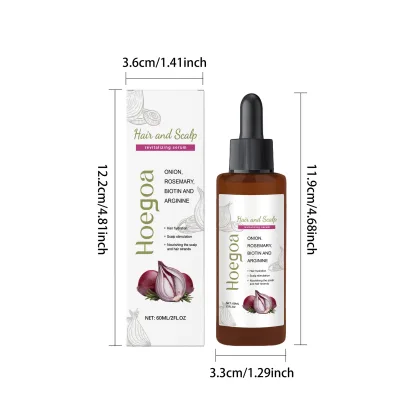
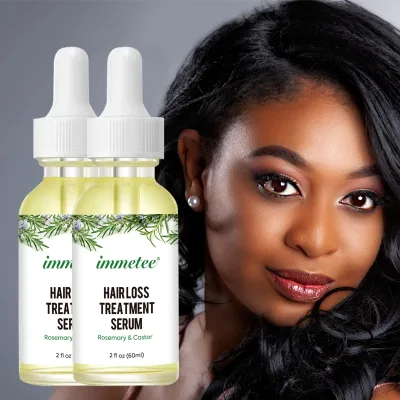
In the B2B procurement landscape, the term "organic oil-free hair serum" requires precise interpretation to align with actual market offerings. Based on the available product data, the market presents a nuanced landscape where "organic" and "oil-free" attributes often coexist with specific formulations like "hair oil" or "serum" that may contain herbal extracts. The observed product listings reveal a significant overlap between products labeled as "Hair Scalp revitalizing serun" and those identified as "Rosemary Oil Hair Growth Oil." While the core keyword emphasizes an oil-free profile, the supplied facts indicate that many high-confidence listings feature ingredients described as "Organic," "Herbal," and "Cruelty-Free," with specific applications targeting "Color Treated Hair," "curly hair," and "damaged hair."
Buyers must recognize that the term "oil-free" in this context often refers to the absence of heavy mineral oils or silicones, rather than the exclusion of all lipid-based botanical extracts. The data shows products with a "Concentration" formula and "60ml" volume, suggesting a focus on potent, concentrated active ingredients rather than dilute solutions. The presence of "Onion Hair Serum" and "Rosemary Oil" in the listings highlights that the "oil-free" claim is frequently associated with specific botanical oils (like rosemary or onion extract) that are intended to be non-greasy or quickly absorbed, distinguishing them from traditional heavy hair oils. Procurement strategies must therefore focus on verifying the specific ingredient list to ensure the product meets the "oil-free" requirement without compromising the "organic" and "nourishing" benefits observed in the market.
Technical Specifications and Formulation Analysis
When evaluating technical specifications for organic hair serums, buyers should prioritize the physical and chemical attributes that define product performance and stability. The observed product data provides a clear baseline for standard specifications in this category. Most listings indicate a standard volume of 60ml, though customized volumes are available, which allows for flexibility in packaging strategies. The single package size is frequently cited as 5x5x12 cm, a dimension that suggests a compact, ergonomic design suitable for retail shelving or direct-to-consumer shipping. The weight of the product is recorded at 82g, with a single gross weight of 0.120 kg, indicating the inclusion of packaging materials in the total weight calculation.
The formulation type is a critical differentiator. The data highlights a "Concentration" formula, which implies a high ratio of active ingredients relative to the carrier base. This is particularly relevant for products targeting "Hair-Loss Prevention," "Nourishing," and "Hair-Repairing." The material composition often involves a "Glass Bottle," which is preferred for preserving the integrity of organic and herbal ingredients by protecting them from light degradation and chemical interaction. The color of the product varies, with observations of "Onion Hair Serum" (often associated with a specific hue), "Green" (likely indicating herbal content), and "Blue" variants, suggesting that color is a functional indicator of the specific botanical extract used rather than a uniform standard.
Furthermore, the application method is specified as "For Home Use," and the time of use is generally "Day," though some products may be suitable for overnight treatment. The target audience is broad, covering "All Ages," which expands the potential market reach. Buyers should verify that the "Single package size" and "prod_model" numbers (such as BD7117, HC252, or FL) align with their logistical requirements. The standard packaging is listed as "Carton" or "Cartons," with dimensions like 43x42x36 cm for bulk shipping, which is essential for calculating freight costs and warehouse space.
Compliance, Certification, and Regulatory Standards
Navigating the regulatory landscape is paramount when sourcing organic and herbal hair care products. The supplied facts explicitly list several certifications that are critical for establishing product legitimacy and market access. These include CE, FDA, GMP, and MSDS. The presence of these certifications indicates that the manufacturing facilities adhere to Good Manufacturing Practices (GMP) and that the products have undergone safety assessments. MSDS (Material Safety Data Sheet) is particularly important for understanding the chemical composition and handling requirements, ensuring that the "Organic" and "Herbal" claims are backed by safety data.
The "place of origin" is consistently identified as China, with specific mentions of Guangdong. This region is a known hub for cosmetic manufacturing, but buyers must verify that the specific factory holds the necessary local and international certifications. The "OEM" and "ODM" capabilities are prominent, suggesting that many suppliers offer custom branding and formulation services. However, the "OEM/ODM" section also notes "Accept Low Moq Customization," which is a significant advantage for buyers looking to test the market with smaller batches. The "MOQ" (Minimum Order Quantity) is observed to range from 10 to 10,000 units, with a specific high-confidence fact stating an MOQ of 1000pcs for OEM/ODM services. This range provides flexibility for both small startups and large retailers.
Buyers should also verify the "prod_standard" and "prod_packing" details. While some standards are listed as dimensions (e.g., 43x42x36cm), others refer to weight (e.g., 200g). It is crucial to distinguish between product weight and packaging weight to avoid discrepancies in shipping calculations. The "Certification" list serves as a baseline, but buyers must request current, valid certificates for each specific batch or production run to ensure ongoing compliance. The "Cruelty-Free" and "Organic" ingredient claims are supported by the "ingredient" attributes, but these should be cross-referenced with the certification documents to ensure they meet the specific standards of the target market, such as USDA Organic or similar regional equivalents.
Cost Drivers and Pricing Dynamics
The pricing structure for organic hair serums is influenced by several key factors, including the complexity of the formulation, the volume of the order, and the level of customization required. The observed price range in the market is between $0.86 and $11.6 USD. This wide variance suggests that the cost is heavily dependent on the specific ingredients used, the quality of the packaging (e.g., glass vs. plastic), and the extent of the OEM/ODM services. Products with higher concentrations of active herbal ingredients, such as rosemary or onion extracts, likely command prices at the higher end of this spectrum.
The MOQ is a primary driver of unit cost. The data indicates an MOQ of 1000pcs for OEM/ODM, but the general observed range is 10 to 10,000. Buyers purchasing at the lower end of the MOQ range (e.g., 10-100 units) will likely face a higher per-unit cost compared to those ordering at the 1000pc or 10,000pc levels. The "Sample Offered" attribute is a critical cost consideration; while samples allow for quality verification, they may incur separate shipping or handling fees. The "Customization" feature, including "Fully Brand" services, adds to the cost due to the setup fees for molds, labels, and formulation adjustments.
Additionally, the "place of origin" and "lead time" (though not explicitly quantified in the facts) impact the final landed cost. Manufacturing in Guangdong, China, offers competitive labor and material costs, but logistics and tariffs must be factored into the total budget. The "prod_standard" and "prod_packing" specifications also influence costs; for instance, glass bottles are more expensive to source and ship than plastic alternatives. Buyers should request detailed breakdowns of costs to understand the proportion of material, labor, and overhead in the final price. The "Selling Units" are listed as "Single item," which simplifies pricing calculations but requires careful aggregation for bulk orders.
Supplier Evaluation and Quality Control Protocols
Evaluating suppliers for organic hair serums requires a rigorous approach to ensure consistency and quality. The "OEM" and "ODM" capabilities suggest that many suppliers are contract manufacturers, meaning the buyer must assess the supplier's ability to maintain strict quality control standards. The "GMP" certification is a strong indicator of a supplier's commitment to quality, but buyers should go further by requesting audit reports or third-party verification of their manufacturing processes. The "Sample Offered" attribute is a valuable tool for initial evaluation; buyers should order samples to test the product's texture, scent, and efficacy on the target hair types, such as "curly hair" or "damaged hair."
Quality control should extend beyond the initial sample. Buyers should establish clear specifications for the "prod_model" and "prod_standard" to ensure that every batch matches the approved sample. The "ingredient" list must be strictly adhered to, with "Organic" and "Herbal" components verified through certificates of analysis (CoA). The "Bottle Material" (Glass Bottle) should be inspected for defects, and the "Single package size" must be consistent to avoid issues with automated packaging lines or retail shelving. The "Weight" and "volume" (60ml) should be measured regularly to ensure compliance with labeling laws and customer expectations.
The "feature" list, including "Hair-Loss Prevention," "Nourishing," and "Hair-Repairing," should be validated through performance testing. While the facts list these as attributes, buyers should request test results or clinical data to substantiate these claims, especially for products targeting "Color Treated Hair." The "Age Group" of "All Ages" implies a need for mild formulations, which should be confirmed through dermatological testing. The "Service" attribute, offering "Customized Service or Fully Brand," indicates a high level of flexibility, but buyers must ensure that the supplier has the capacity to handle these customizations without compromising quality.
Long-Term Procurement and Supply Chain Resilience
Sourcing organic hair serums is not merely a transactional activity but a strategic partnership that requires long-term planning. The "OEM/ODM" nature of the market means that buyers are often investing in custom formulations and branding. This investment necessitates a stable supply chain to ensure continuity. The "MOQ" of 1000pcs for OEM/ODM suggests that buyers should plan for at least this volume to secure the best pricing and production slots. However, the "Accept Low Moq Customization" feature offers a pathway for scaling up gradually, allowing buyers to start with smaller orders and increase volume as market demand grows.
Supply chain resilience is also dependent on the "place of origin" and the supplier's ability to manage raw materials. The "Organic" and "Herbal" ingredients are subject to seasonal variations and agricultural yields. Buyers should inquire about the supplier's sourcing strategy for these raw materials to ensure a consistent supply. The "Certification" status (CE, FDA, GMP, MSDS) must be maintained over time, requiring regular renewals and audits. The "prod_packing" and "prod_standard" should be designed to withstand various logistics conditions, from humidity to temperature fluctuations, to protect the integrity of the "Concentration" formula.
Furthermore, the "feature" of "Hair-Loss Prevention" and "Nourishing" positions these products in a competitive market. Buyers should monitor market trends and consumer preferences to ensure their product offerings remain relevant. The "application" for "Home Use" suggests a direct-to-consumer or retail channel, which requires robust packaging and branding. The "Single package size" and "volume" should be optimized for shipping efficiency to reduce costs and environmental impact. Finally, the "Service" aspect of "Customized Service or Fully Brand" implies a need for ongoing communication and collaboration with the supplier to adapt to changing market conditions and regulatory requirements. By focusing on these long-term considerations, buyers can build a sustainable and profitable procurement strategy for organic oil-free hair serums.
FAQs
What certifications do organic hair serum manufacturers hold?
Manufacturers typically hold CE, FDA, GMP, and MSDS certifications. These credentials confirm adherence to Good Manufacturing Practices and safety standards for organic and herbal ingredients used in the formulations.
How much is the minimum order quantity for custom serum?
The minimum order quantity is generally 1000 pieces for OEM and ODM services. Some suppliers accept lower customization orders, but the standard baseline for branded production remains at this volume.
Which bottle material is used for the organic hair serum?
The product is commonly packaged in glass bottles. This material protects the organic and herbal ingredients from light degradation and ensures the integrity of the concentrated formula during storage and transport.
Can I get samples of the rosemary oil hair growth serum?
Yes, samples are offered to buyers for quality verification. This allows procurement teams to test the texture, scent, and efficacy on specific hair types like curly or damaged hair before placing bulk orders.
What is the standard volume for the hair scalp revitalizing serum?
The standard volume is 60ml, though customized volumes are available. This size fits within a compact package dimension of 5x5x12 cm, making it suitable for retail shelving and direct shipping.
Where are the organic hair serum factories located?
The factories are located in China, specifically in the Guangdong region. This area is a known hub for cosmetic manufacturing, offering competitive costs and established supply chains for organic ingredients.